
Power flush cost in the UK
A power flush in the UK typically costs £300 to £700, depending on how many radiators you have. A three-bedroom house with eight radiators usually lands around £400 to £550.
British Gas charges more than most independent engineers for the same job — often £600 to £900. Worth getting two or three quotes before booking.
Prices checked August 2026
Power flush cost by house size
Most engineers price by the number of radiators, either as a flat rate for the property or a base fee plus so much per radiator.
| Property | Radiators | Typical cost |
|---|---|---|
| Flat or 1 bed | 4 – 5 | £250 – £400 |
| 2 bed house | 6 – 7 | £300 – £480 |
| 3 bed house | 8 – 10 | £400 – £600 |
| 4 bed house | 10 – 12 | £500 – £750 |
| 5+ bed house | 12+ | £600 – £1,000 |
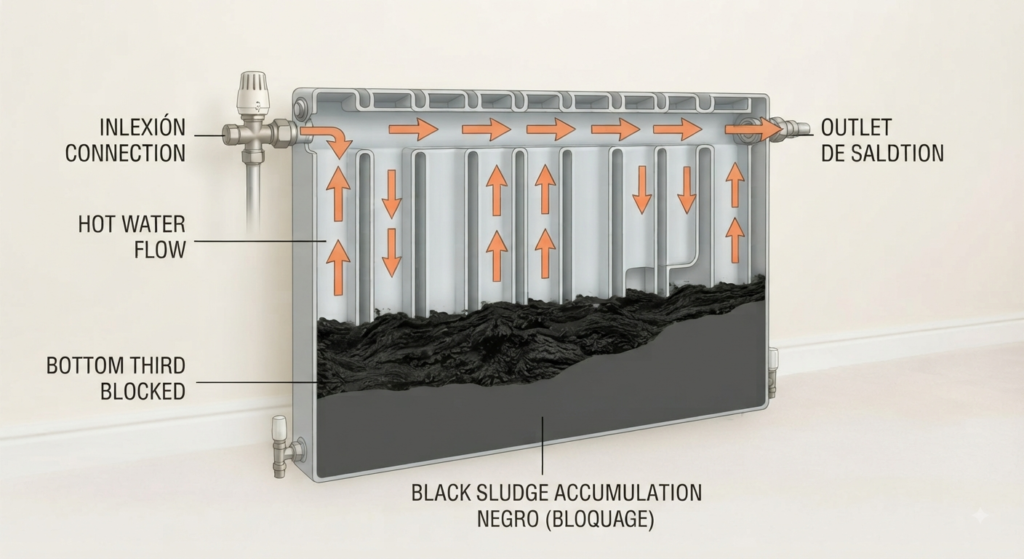
A whole-house flush takes most of a day — usually six to eight hours. Anyone quoting two hours for a ten-radiator system is doing something other than a power flush.
British Gas power flush cost
British Gas typically charges £600 to £900 for a power flush, against £400 to £550 from a local engineer for the same house.
You're paying for something real: national coverage, a guarantee behind the work, and an engineer who won't disappear. If you already have a HomeCare policy, the flush may be discounted or covered.
You're also paying overhead. An independent Gas Safe engineer with good reviews does the same job to the same standard, and often takes longer over it because they're not working to a national scheduling system.
The middle path most people take: get one quote from British Gas as a benchmark, then two from local engineers on Checkatrade or MyBuilder, and decide from there.
What affects the price
- Number of radiators — the main driver, since each one is flushed individually
- How dirty the system is — heavily sludged systems take longer and use more chemical
- Location — London and the South East run 20–30% above the national average
- Access — radiators behind furniture or in awkward corners add time
- What's included — inhibitor and a magnetic filter may or may not be in the quote
- System type — older open-vented systems can be more involved than sealed ones
That fifth point is where quotes diverge most. Always ask whether the price includes inhibitor and a magnetic filter. Without inhibitor afterwards the system starts silting up again immediately, and a flush without it is money thrown away.
Do you actually need one?
Power flushing gets sold more often than it's needed. Here's how to tell.
Signs you probably do:
- Radiators cold at the bottom, warm at the top
- Black water when you bleed
- Banging or kettling noises from the boiler
- The system takes much longer to warm than it used to
- Repeated pump or valve failures
Signs you're being upsold:
- The system is under five years old with no symptoms
- It's offered as routine maintenance without a diagnosis
- Nobody has looked at the system water
- It's presented as a condition of a boiler warranty without explanation
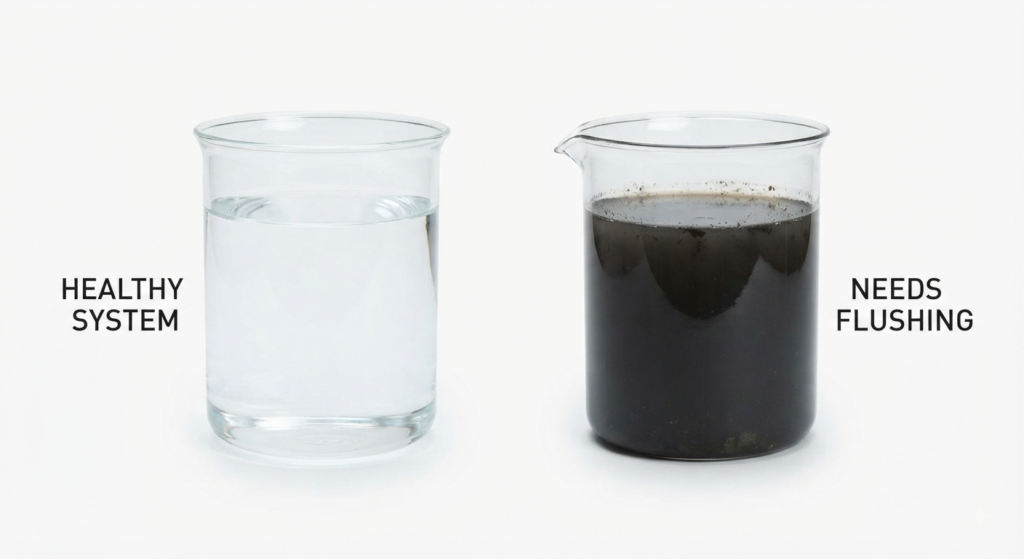
A useful test costs nothing: bleed one radiator into a clear glass. Clear water means the system is fine. Black or brown water means magnetite, and that's what a flush removes.
Power flush vs the alternatives
| Option | Typical cost | What it does | When it's right |
| Chemical flush | £150 – £300 | Cleaner circulated for hours, then drained | Mild sludge, no blockages |
| Power flush | £300 – £700 | High-flow pump forces water through each radiator | Real sludge, cold spots |
| Magnetic filter | £150 – £250 fitted | Catches particles before they settle | After any flush, as prevention |
| Single radiator flush | £80 – £150 | One radiator removed and hosed outside | Only one radiator affected |
If only one radiator is cold at the bottom, a whole-house power flush is overkill. Removing that radiator and flushing it in the garden costs a fraction and often fixes it. Repeated leaks are a different signal — that usually means corrosion has already gone too far.
Getting a fair quote
Ask every engineer the same four questions:
- How many radiators is the price based on?
- Does it include inhibitor afterwards?
- Is a magnetic filter included or extra?
- How long will it take?
That last one is the giveaway. A proper power flush on a three-bedroom house takes six to eight hours. A two-hour quote is a chemical flush being sold as a power flush.
Be wary of a fixed price given over the phone without anyone seeing the system. Sludge levels vary enormously, and an honest quote usually comes with a caveat.
More radiator problems
Sludge is one cause of a cold radiator. These guides cover the others, and how to tell them apart.
Frequently asked questions
How much should a power flush cost?
£300 to £700 depending on the number of radiators. A three-bedroom house typically comes in at £400 to £550.
How much does British Gas charge for a power flush?
Usually £600 to £900, against £400 to £550 from a local engineer. You're paying for national coverage and a guarantee.
How long does a power flush take?
Six to eight hours for a three-bedroom house. Anything much quicker is a chemical flush, not a power flush.
How often should you power flush central heating?
Only when the system needs it. With inhibitor and a magnetic filter fitted, a properly flushed system can run ten years or more without another.
Is a power flush worth it?
If the system water is black and radiators are cold at the bottom, yes — it's cheaper than replacing radiators or a pump. If there are no symptoms, no.
What is a power flush?
A high-flow pump connected to the system that forces water and cleaning chemicals through each radiator in turn, dislodging the sludge that has settled inside.